Technical Producer / Company Owner at Entertainment Technical Solutions
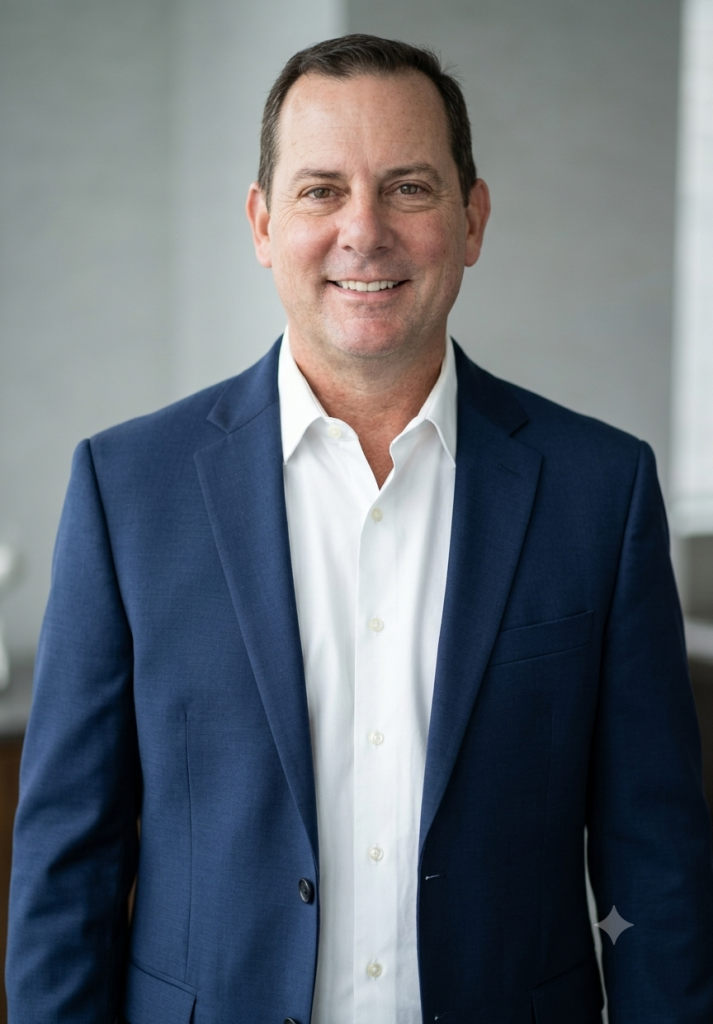
Mike Layman is a Technical Producer and company owner of Entertainment Technical Solutions, based in Orlando, Florida. Over the course of a 30-plus-year career in themed entertainment, Mike has become a respected leader known for his ability to bring complex technical productions from concept through delivery. His expertise spans both the theme park and cruise line industries, where he has contributed to cutting-edge entertainment venue designs for Royal Caribbean’s Generation 3 Oasis Class ships and Norwegian’s Luna Class 2 ships.
Mike spent 25 years at Disneyland Resort as a Technical Director, where he oversaw live entertainment technology for major shows including Fantasmic! One of the defining moments of his career was leading the massive upgrade of Fantasmic!’s control systems from the original 1992 analog setup to a modern digital and fiber-optic network. He describes the process as “the scariest thing in the world to do,” but one that proved the team could tackle seemingly impossible challenges.
Today, through Entertainment Technical Solutions, Mike assembles the right specialists for each project, working alongside creative teams to understand the vision and then translate it into technical reality. His philosophy is simple: make the impossible possible. He is passionate about hearing the joy of audiences and thrives on the daily challenge of inventing new methods and equipment that have never existed before.
A fun fact about Mike: he is one of 10 people listed on three patents for a PIVOTABLE FLUID EFFECTS PLATFORM, a robotic water fountain system used in themed entertainment.
Mike Layman, Technical Producer and Company Owner at Entertainment Technical Solutions, shares career wisdom from 30+ years in themed entertainment including 25 years at Disneyland. Watch the episode (11:51): https://www.youtube.com/watch?v=QeP6gmEo3g8 | Full episode (38:36): https://www.youtube.com/watch?v=cVOw6Pjc9dI
[0:00] Hi, it's Ian from Attraction Insight and
[0:02] I'm here with Mike and Phil. How are you
[0:04] guys today?
[0:04] Good, thanks. How you doing?
[0:05] Good,
[0:05] good.
[0:06] Uh, please uh by all means uh who who
[0:09] are you guys and where you coming from?
[0:10] Yeah, my name is Mike Layman. I'm
[0:11] originally from uh Southern California,
[0:13] worked at the Disneyland Resort for 25
[0:15] years as a technical director uh where
[0:17] my big focus was all the live
[0:19] entertainment technology uh within the
[0:21] show itself. So, make sure we cohes it
[0:23] all together. Yeah. So, it all functions
[0:25] seamlessly, flawlessly, and presents
[0:27] good shows for our guests on a nightly
[0:28] basis. Big fan. Big fan. Big fan. I
[0:31] didn't know your name, but trust me, I'm
[0:32] a big fan.
[0:32] The one thing we'll talk about later is
[0:34] fantasmic.
[0:34] Oh, that's excellent. Okay. Well, we'll
[0:36] jump in, Phil. How you
[0:37] doing? Thank you. Uh oh, I will hold
[0:39] this. Hi, my name is Phil Lindseay. Uh I
[0:41] am actually a 40-year veteran of the
[0:42] attraction industry. Uh for all of those
[0:45] 40 years, I have been primarily what I
[0:47] would call a technologist. My job has
[0:48] been to help create all of the
[0:51] technologies over the years that have uh
[0:54] brought all of these attractions and
[0:56] rides and shows to life.
[0:58] Well, that's incredible. So, I didn't
[1:01] This is the crazy thing about Ayappa is
[1:03] that I mean I I'll call you legends at
[1:06] 25 and and 40 years respectively. Uh
[1:09] that's just amazing. So, I'm glad to
[1:12] talk to you and really get your insight
[1:13] about experience on how that stuff uh
[1:15] goes down. Um can you can you talk to me
[1:18] about some of the projects that you've
[1:19] been working on recently that you that
[1:21] you're allowed to talk about?
[1:22] Sure. I I'll do a a short one, but uh I
[1:24] know Mike has the headline here. So, I
[1:26] think
[1:26] Oh, please. Uh we just opened in the
[1:29] last two years. The last two projects I
[1:30] opened were a an attraction Boston
[1:33] called View Boston. Okay.
[1:34] So like the biggest thing we did was
[1:36] this massive 100 foot scale model of
[1:39] Boston that we projection map.
[1:40] Wow.
[1:41] So you can watch us run the marathon.
[1:43] You'll see boat races all sorts of stuff
[1:46] in Boston. And then this past March uh I
[1:49] just opened the National Medal of Honor
[1:51] Museum here in Texas.
[1:52] Okay. And probably the centerpiece for
[1:54] that is we have an AI version of a medal
[1:58] recipient. Somebody who's won the medal,
[1:59] a real person that you can ask questions
[2:02] to and they will answer it.
[2:04] Wow. That's
[2:04] so so that's been a really big thing.
[2:07] That's incredible. I mean, we've seen
[2:08] some cool uses of AI, especially at this
[2:10] show. Um, but that's crazy that you
[2:15] would uh
[2:17] that's crazy that you would be able to
[2:20] just basically make this, you know,
[2:21] museum curator.
[2:22] Yes, exactly. And and it keeps their
[2:25] story alive. Like the the Medal of Honor
[2:27] recipients are getting older and we will
[2:28] lose them eventually. We have their
[2:30] stories. So that's important.
[2:32] That's so cool.
[2:32] I'm gonna let this Mike talk about a a
[2:34] much bigger grow.
[2:35] Oh,
[2:36] all right. Mike, talk to us about the
[2:37] much bigger project. So yeah, one of the
[2:38] biggest projects of my career so far is
[2:40] uh working on Fantasmic.
[2:42] Holy moly.
[2:43] Debuted in 1992 on Tom Island in
[2:46] Anaheim, California. The granddaddy of
[2:48] all spectaculars if you really want to
[2:49] look at it. Uh this show is I took it
[2:52] over many years,
[2:54] you know, as a career path. And we
[2:56] actually uh had to upgrade control
[2:57] systems for the for the show itself
[2:59] where
[3:00] made mid lifestyle made a lifestyle
[3:03] change because Disney created the
[3:05] control systems way back in the in the
[3:07] '90s. And even earlier than that for
[3:09] even audio central.
[3:10] I'm sorry. I've got to say a word for
[3:11] our audience who may not understand us.
[3:12] Yeah.
[3:13] The show when we opened it in 1992 was
[3:16] analog.
[3:17] The whole show was analog.
[3:18] Oh my god.
[3:19] Eat squad alert. Eat squad alert. And
[3:21] it's true. It was the IO input outputs
[3:24] was crazy. And so to turn out those
[3:26] cabinets to put in digital cabinets and
[3:29] get the Ethernet connected was just the
[3:31] scariest thing in the world to do. But
[3:32] knowing that we could do it.
[3:34] Yeah. Just as a frame of reference. uh
[3:36] basically I mean and the difference
[3:37] between analog and digital for anybody
[3:39] who doesn't know I mean it's size
[3:41] primarily and it can be hundfolds I mean
[3:46] we really do live in some crazy
[3:48] computing times where the old technology
[3:51] we need a lot to to
[3:52] for people who want to get into the
[3:54] weeds so for every queue that had to
[3:56] happen there had to be a wire literally
[3:59] had to be a wire today thanks to
[4:00] networking we don't need to do that
[4:02] anymore
[4:02] Wow that's incredible
[4:04] yeah the technology behind It's
[4:05] fantastic. And transmission from a show
[4:07] control booth that's hundreds of feet
[4:09] away to the Shintel building itself was
[4:12] impressive and we change all the fiber
[4:13] optics.
[4:14] Well, so that's so cool just because I
[4:16] mean you did get to see the evolution of
[4:19] this and and be a really active part of
[4:21] it seems. Um, so I mean I know there's
[4:26] so many things that go into it, but was
[4:27] there like a particular challenge that
[4:29] you really had to like overcome? Uh, I I
[4:32] know I know it's a loaded question.
[4:34] That's a wild question.
[4:35] Let's see. Uh, do I start with timeline
[4:37] or budget? [laughter]
[4:38] Yeah. I mean, yeah.
[4:39] And the other thing is is remember one
[4:41] of the one of the true joys of working
[4:43] in this field.
[4:44] Everything we do is a prototype.
[4:46] Yeah.
[4:47] There's never been built before. So,
[4:49] we're kind of winging it.
[4:50] Yeah.
[4:51] Which is always fun
[4:52] until it works.
[4:53] Yeah. I use the phrase, you know, make
[4:54] the impossible possible. And it's we're
[4:56] inventing every day. And I tell the team
[4:57] members that
[4:58] what we don't know tomorrow,
[5:00] you know, we could build. That's
[5:03] fantastic. Fantastic way to go about it.
[5:05] Okay. So, I mean, I would be remiss with
[5:08] the experiments that experience that I
[5:10] have in front of me right now. Please,
[5:12] somebody who's trying to get into this,
[5:13] somebody's trying to be a technical
[5:15] director for Disney, somebody's trying
[5:16] to be a technical director for wherever.
[5:18] I mean, what do you say to those people?
[5:21] And we'll I'll context it a little bit.
[5:23] These guys are out of school. Well, just
[5:26] just to give you a frame of reference.
[5:27] These guys are not, you know, oh, well,
[5:29] someday I'm going to go work for like
[5:31] they're they're taking steps. What do
[5:33] they do after they've got that baseline
[5:35] skill set?
[5:36] Well, I think you have the baseline
[5:37] skill set, but you start off humble.
[5:38] Sure.
[5:39] Start off humble, have an open mind
[5:41] because what you learn in the books and
[5:42] the school is definitely a good stepping
[5:45] stone to grow in the real world where
[5:46] you actually learn a lot more because
[5:48] real world experience brings you to that
[5:50] spot of
[5:51] ah I could relate to it now. And that's
[5:53] really a big important thing I find
[5:54] which is super critical in the big
[5:56] picture. Phil.
[5:57] Yeah. Um and the other thing I would say
[5:59] is the the the
[6:02] thing that will be important for
[6:04] instance we both started I don't know
[6:06] did you get a theater degree?
[6:07] No.
[6:08] No. I got a theater degree.
[6:09] I want to do a show.
[6:10] Um so this was back in the 80s and so I
[6:12] turned a theater degree into an
[6:14] attractions career for 40 years. Um, and
[6:17] the thing that's really important that
[6:19] there's two things I would say that are
[6:21] are going to be important for people.
[6:22] One is even if you don't want to be a
[6:25] project manager, take project management
[6:27] classes.
[6:28] Interesting.
[6:28] Understanding how the process of putting
[6:31] something together over time over
[6:33] sometimes three to four years is very
[6:36] important.
[6:37] Yeah.
[6:37] And the second thing is that
[6:39] don't be a specialist if you want to be
[6:41] like a technologist.
[6:43] Okay. knowing as much as you can,
[6:44] whether it's audiovisisual, whether it's
[6:47] computer control, whether it's um making
[6:50] an audio vantronic talk,
[6:52] the structural, it's great to have as
[6:54] much as possible because to be a
[6:56] technical director type person, you kind
[6:58] of have to oversee the entirety of the
[7:00] technical package. That's what they're
[7:02] relying on us on. Yeah. Is there is a
[7:04] ton of specialists. There are brilliant
[7:06] audio designers, there are brilliant
[7:08] ride designers, there are brilliant
[7:10] media creators, but somebody has to
[7:12] oversee everything that it all fits
[7:14] together.
[7:15] Yeah.
[7:16] Yeah. And when you were talking about
[7:17] being a technical director, I mean,
[7:19] where where it is it it was
[7:21] all-encompassing. It was at no point in
[7:24] time was it like, oh, well, I'm only
[7:25] doing this. I'm only doing this. It was
[7:27] like, okay, well, I do need to know
[7:29] every department, every, you know, kind
[7:32] of trigger, every uh show control, all
[7:36] that stuff. Even if maybe you're not the
[7:38] one touching it, but
[7:40] but at the end of the day, when you're
[7:41] sitting there doing the design reviews
[7:42] for these systems, you want to be able
[7:43] to actually understand what's being put
[7:44] in front of you. So you could call it
[7:46] out, say, "Change that to this, do this,
[7:48] do that." Because that's where then your
[7:50] specialists can go back into the weeds
[7:52] and redraw their oneline diagrams to
[7:54] everything to make that system work
[7:55] properly because you know what you want
[7:56] it to do.
[7:57] And and the other thing I would say,
[7:58] what I have what I think is the most fun
[8:01] and it's the biggest pain in the rear is
[8:03] when we're building the thing itself,
[8:05] half of our job is being spent in the
[8:07] real world. Yeah.
[8:09] Looking at this stuff. And I guarantee
[8:11] you there will come the day where you
[8:13] will come to site and you will go, "Why
[8:15] is that there?
[8:17] That's not supposed to be there. That's
[8:18] supposed to be there."
[8:20] Y
[8:21] I swear we on paper it looks great.
[8:23] Yeah. Exactly. It worked on paper.
[8:25] Reality says on the wall
[8:27] and and it's it's it's the thing to
[8:29] remember is if for people and I
[8:31] encourage younger people who want to do
[8:32] this to to sort of reach out to the
[8:35] everybody here in the IPA show is happy
[8:36] to chat with people.
[8:37] Yeah. And um learn as much as you can.
[8:41] Meet the people here. Um because it it's
[8:44] any successful career will be about the
[8:47] people you meet.
[8:48] I I couldn't couldn't agree more.
[8:49] The skills are great to have because
[8:51] that just proves you can do the job.
[8:52] Yeah.
[8:53] But it's really going to be about who
[8:54] you get along with, who who appreciate
[8:56] you,
[8:57] you know, the opportunities that you're
[8:59] going to get depending on whom
[9:00] you you come up. And I will also tell
[9:02] you that this is a job for people who
[9:05] will jump to different places. Yeah,
[9:07] it it's very rare that um you will start
[9:10] at say a Disneyland. I know people who
[9:12] did this but then worked for 40 years,
[9:14] but that is the rarity.
[9:16] It's more likely, well, I'll go here and
[9:17] I'll go to Universal and then I'll go to
[9:18] a museum and then I'll go to here.
[9:21] Yeah. Along that line of gaining your
[9:23] experience. I mean, uh maybe the the big
[9:26] boys are not necessarily where you start
[9:28] just because you know you're I mean to
[9:31] be perfect L is not ready.
[9:33] Well, you've got you've got to have some
[9:34] time to grow.
[9:35] It's not only that. I think that that
[9:37] there there are always entry level
[9:39] positions at any level.
[9:41] Sure.
[9:41] But the most opportunities you will find
[9:43] are likely with the the people on the
[9:45] floor here, right? That that there are
[9:48] hundreds of companies. I'm looking at
[9:50] one right here. You don't have to put
[9:51] the camera on it, but there's an
[9:52] engineering company right over there.
[9:54] And getting a a um you know, an entry-
[9:58] level job there. There's going to be way
[9:59] more of those than you might find at a
[10:01] Disney or Universal.
[10:02] That's fair. That's fair. And maybe
[10:04] maybe a little less competitive. Yeah,
[10:06] a little less competitive. [laughter]
[10:07] But the other thing we bit, and this is
[10:09] also important, if you're young and
[10:10] starting out, build your portfolio. Keep
[10:12] keep the and keep the keep the work. You
[10:15] know, it's somebody you never know when
[10:17] somebody will say, "Okay, show me your
[10:19] math."
[10:19] Yeah.
[10:20] Okay,
[10:22] here it is. Test five. Uh uh
[10:25] and I think to the to Phil's point,
[10:27] build your street credentials, build
[10:28] your resume, get experience across the
[10:30] board, don't pigeon hole yourself.
[10:32] Yeah.
[10:32] And lastly, don't burn bridges. Yeah,
[10:34] our industry is so small, so niche that
[10:37] if you do something wrong, everybody
[10:39] chances are they'll find out and it's be
[10:41] a challenge for you to recover out of
[10:42] that mess.
[10:43] It it is incredible to me that even as
[10:45] big as IA is, uh I still find people
[10:48] that I I know and and quickly too. It it
[10:52] just and you know, my network's not that
[10:54] big, but it's just also not that big of
[10:58] an industry, you know,
[10:59] and and the the thing and let me just
[11:01] put this out there. You know, Mike and I
[11:03] are are at the end of our careers,
[11:05] right? We're looking to you folks to to
[11:08] come and replace us because I I don't
[11:11] want to do this forever. I'm old. I'd
[11:14] like to sit down once in a while.
[11:17] Yeah, I've got a few more years, but
[11:18] yeah, thanks. I'm not retiring yet, but
[11:20] yet let's mentor up and let's grow.
[11:22] Well, okay. So, this has just been a
[11:23] fantastic uh talk with both of you.
[11:25] Thank you so much. Absolutely.
[11:27] Thanks for popping over. This is
[11:28] awesome, man. You guys having a lunch on
[11:30] a bench right here. And there you go.
[11:31] Yeah, this this has been so great. I
[11:33] mean, and I I do hope this gets to the
[11:35] person who needs to hear it. Yeah.
[11:37] And you know, that person who has these
[11:40] dreams of uh you know, building the next
[11:42] next theme park. Hopefully the words you
[11:45] you know, those are words to live by.
[11:46] So, thank you so much, guys.
[11:48] You're welcome. Thank you guys so much.
[11:49] Appreciate