Co-Owner / Amusement Industry Consultant at Cosmic Clawcade (now Planet Novak)
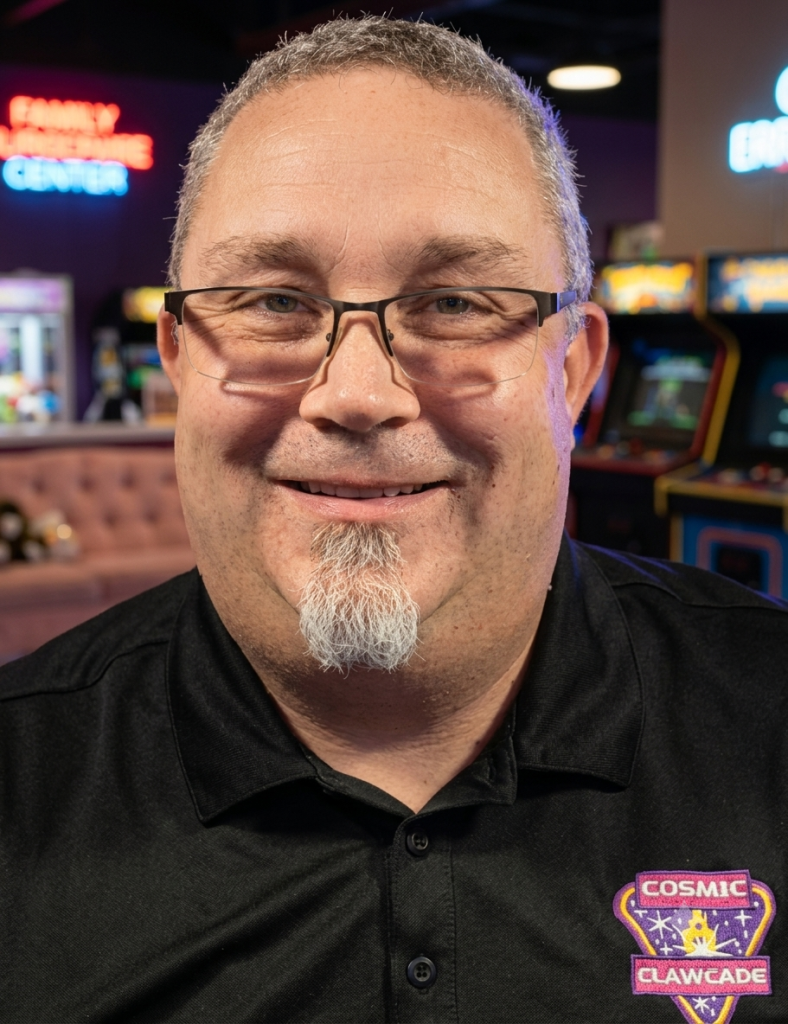
Clint Novak is a co-owner and amusement industry consultant based in Fredericksburg, Virginia. His journey in the attractions world began in 1999 when he started as a ride operator at Valleyfair Amusement Park in Minnesota. His passion for roller coasters led him to co-found the Coaster Crew enthusiast club and launch the “In the Loop” podcast in 2004, pioneering amusement park podcasting before it was mainstream. The channel grew to over 10 million views and 100,000 subscribers. He later created Happily Ever Novak with his wife Shari, exploring resorts, restaurants, and amusement parks.
Clint joined Fun Land of Fredericksburg, formerly known as Central Park Fun-Land, initially as a ride attendant and quickly rose to General Manager. Under his leadership, the park added 16 rides and attractions, including Virginia’s Largest Multi-Level Go Kart Track, Thunder Speedway, built in 2019. He grew revenues from under $3 million to consistently over $5 million. His efforts culminated in Fun Land winning the Golden Ticket Award for Best Breakout FEC 2023 from Amusement Today, the highest accolade in the industry. He also ran monthly FEC Mastermind Calls for five years, uniting FEC owners across the country in a collaborative space.
After leaving Fun Land, Clint worked as a consultant for ANA Global for nearly two years, visiting approximately 250 FEC locations across the US and Canada. He then co-founded Cosmic Clawcade, now rebranded as Planet Novak, with business partner Nate. The claw machine-focused arcade is located at Spotsylvania Towne Centre in Fredericksburg, VA, and was taken from concept to opening in just a few months.
A fun fact about Clint: he always credits the success of Fun Land of Fredericksburg to the fact that he saw the park from a guest perspective. He says, “I was always engrossed on how I hate standing in lines. So how can we make it so there’s no lines to stand in?”
Clint Novak shares his incredible journey from roller coaster fan and podcaster to winning the Golden Ticket Award for Best Breakout FEC and opening his own claw machine arcade. Watch the full episode (53:08): https://www.youtube.com/watch?v=0sxrHYYuSJ4
[0:00] Hey everyone, on today's episode of Attractions Insides, we are talking with a true legend in the amusement industry,
[0:06] Clint, who turned his passion for roller coaster into an incredible career as a
[0:11] podcaster, park operator, and now founder of the brand new cosmic Cloade.
[0:16] Uh, I started uh as a ride operator in 1999 at Valley Fair in Minnesota. I was
[0:22] just out of high school uh getting ready to go to college for television broadcasting and editing. and uh I just
[0:29] I spent a a summer working at Valley Fair and that was really the very first exposure I had to the amusement industry
[0:37] and where I really became a fan. After that, I started traveling all over the US uh to go to uh ride some big roller
[0:43] coasters cuz Minnesota we don't have a lot of roller coasters anywhere near us. And then eventually I moved out to
[0:49] Virginia uh for a radio job. And uh when I did that, it really expanded my
[0:54] horizons when it came to amusement parks and roller coasters because there's so many out here on the east coast that I
[1:00] was able to then bounce all over from amusement park to amusement park, which is uh why I created the uh roller
[1:06] coaster enthusiast club, the coaster crew, which is still in existence today. Uh run by Tim Hollerin. Uh I was the
[1:13] original founder and uh and he has taken over the reigns and has been running the club ever since.
[1:18] How did you transition from fan to a creator in the loop podcast? You started
[1:25] it in 2004 before podcasts were even mainstream. What inspired you to start
[1:30] it? So, it was actually out of necessity. I had a coaster club and I needed a website and I didn't know how to build
[1:37] websites. I was in radio at the time, so I I had the ability to do all this crazy audio recording from the studio. And
[1:45] what I did was I basically used as a bargain shop. I said, "If you help me create a website for my club, I will
[1:52] then in turn give you a daily or weekly audio file that people could download
[1:57] that would be about roller coaster news and industry news." And so that's how In the Loop started. It started on
[2:03] coaster-net.com uh and then shortly after moved over to Thrill Network and then eventually we
[2:10] were able to kind of coexist on our own. we were able to, you know, make enough money to pay somebody to uh operate a
[2:16] website for us. So we no longer had to be attached to any one website. And so that's what started in the loop. It was
[2:22] I mean it was well well before podcasting. I mean you had to actually go to the website, download the audio
[2:27] file and then listen to it or listen to it from the website uh because there was no podcast feed that would download. And
[2:34] this is before like this is like iPad like like what was it? Uh before iPhones, it was the iPod iPods and
[2:41] shuffles and when MP3 players were uh becoming popular. So this was this is a
[2:46] long time ago. So you know, Coaster Radio uh has the tagline that they're the first uh original uh coaster theme
[2:53] park podcast, but we were doing it well before podcasting was even a thing. So nice. And it really grew my knowledge of the
[3:00] industry and then my passion and love for the industry as well. Now looking back, did you ever imagine that it would
[3:07] reach like millions of views and become a core voice in the amusement industry? Not at the time. At the time I worked
[3:14] with The Legend and Drew the Intern Holder and we were always trying to find
[3:19] what is we had our the podcast itself, but then we also had uh the YouTube channel. We're always like, "What is
[3:26] going to get a million views?" And we'd go out and do the silliest things at with roller coasters. And it would none
[3:32] of those things ever got a million views. Uh it was a Crayola crayon experience that got a million views. It
[3:38] was just like, you know, silly things that we never would have thought would actually have gotten views ended up getting way more views than than the the
[3:45] creative things we were trying to come up with to get views. And so, yeah, I mean, it was it's crazy. I still have
[3:50] people I haven't been affiliated with in the loop directly uh for quite some time now, but I still have people who come up
[3:56] and and talk to me about our days at In the Loop and and uh you know how we we basically got them into the industry
[4:03] because of what we were doing with the podcast and the uh YouTube channel. Do you think your time interviewing
[4:09] operators and visiting parks helped prepare for running one yourself later?
[4:15] 100%. I I always credit the success of Funland of Fredericksburg to the fact
[4:21] that I always saw the park from a guest perspective. I was always engrossed on
[4:26] how I hate standing in lines. So, how can we make it so there's no lines to stand in? All the things that I I hated
[4:32] doing when I would go to Disney or King's Dominion or Busch Gardens, like how can we make those less of a painful
[4:38] experience for the guests at Funland? And so, that's really what made it so successful in the eight years I was
[4:43] there. Now, I have to ask you, do you still wear the famous propeller beanie to to events?
[4:50] Let's see here. Yes. Yes, I do. I still have the propeller beanie. Still wear it very regularly. Uh anytime I go to an
[4:57] amusement park, I have three of these in my car. So, uh it's a one of one of the three will make it make its way uh onto
[5:04] my head before going into the amusement park. I've never wore it when I was at uh Funland of Fredericksburg. After
[5:10] Funland, I was with ANA Global for two years. Uh, I never made it part of my uniform there, but when I'm at the
[5:15] cosmic clockade, I actually do wear the hat as my signature trademark. So, the hat is still very much a part of my
[5:22] personality and lifestyle. From talking about attractions to running one, let's talk about the next
[5:27] chapter in your life, right? Running and transforming Funland. What were your first impressions when you joined
[5:34] Funland of Fredericksburg? So, at the time it was called Central Park Funland,
[5:40] and it was I I joined in as a manager. Actually, I didn't I wasn't even a manager. I joined in as a ride
[5:45] attendant. I applied for a management position, was turned out, and uh I was like, well, I need something. I I was
[5:52] DJing at bars and stuff at night and I was like, it was really not my lifestyle. I didn't want to do it anymore. So, I agreed to just take a
[5:58] ride operator position at Funland in my early 30s. Within a year, I was
[6:04] running the park as the general manager. And there was some steps in between there where I went up to manager and and
[6:09] attractions manager AGM. But it was really the I mean I I remember sitting at guest services in my early days when
[6:16] I first started there and I had a little notebook and when there was slow I would just write down ideas in the notebook
[6:22] what I wanted to do and what we could do to make Funland a better place. And when I took over, uh, the first thing I did
[6:29] was I said, "We're going to go through all of the, uh, Google reviews we have over the last year and take out all the
[6:35] common themes and fix those." And, uh, the the majority was uh, one, we were
[6:41] dirty. And it it wasn't dirty. The carpet was 15 years old with, you know, soda stains and all the things that go
[6:48] into your carpet after, you know, 15 years. It needed to be replaced. you know, the the uh the art that made
[6:54] Funland unique also made it look very old, a very arcade with Bart Simpson on
[7:00] the wall and Ninja Turtles and all these things. And so we gave it a whole new brand, a new theme. We went to Central
[7:06] Park Funland to Funland of Fredericksburg, more descriptive of what we are and where we were. So, and then
[7:12] we started making small changes with plusing an attraction or replacing an attraction. Um, and as that continued to
[7:19] steamroll, we were able to do bigger and better things, all while making the guest experience a better experience. I
[7:26] don't like waiting in lines. Um, so we created like a textto ride system where you could text us what ride you wanted
[7:31] to go on and then we would be over there in a heartbeat to get you on it and ready to go. Um, just all these things from the guest perspective to make it
[7:37] better for the guest experience. Building Virginia's largest multilevel go-kart track must been a huge project.
[7:45] What were some behind thescenes challenges you faced? It was it was a really big project and
[7:50] it and it happened very quickly. The owner of Funland of Fredericksburg asked me in June of 18 what would what was the
[7:58] next step? What would we want to do? And I said, "Well, I really think we need to build a multi-level go-kart track." And
[8:04] uh and he said, "Well, I want to go look at some multi-level go-kart tracks." I said, "We're going to go to Pigeon Forge, Tennessee." And he's like, "Well,
[8:10] why would we go there?" there and I said, "There's 35 go-kart tracks within a 5 mile stretch, all multilevel." And
[8:15] so, we went there for the weekend. We looked at go-kart tracks. This was July of 18. We worked with J&J on the layout
[8:23] of what we wanted it to be. Then, we got involved with Funspot and how some of the tracks they did, and we worked with
[8:29] their designer to uh put together uh what is now the go-kart track at Funland of Freddersburg, the Thunder uh uh
[8:35] Thunder Speedway. Um we finished in June of 19. So it was about a year from
[8:41] concept to uh finishing the track. It was uh we were hoping to have it done by April. A lot of weather happened while
[8:48] we were building. So it made it hard to continue construction, but the team was there every day working hard to uh get
[8:54] that built. We hired a construction team that came out and did that because I don't know how to build things, but I
[9:00] know how to hire people who can build things. So, I was out on site every day just taking pictures and just at awe of
[9:06] the size and scope of the project that I was involved with because this is like my own little roller coaster tycoon.
[9:12] Like, I got to build and uh put together this track. There is definitely some design mistakes that uh we didn't know
[9:19] were mistakes at the time, but now once it's open, we discovered, oh, these are some things that if I were to build
[9:24] another go-kart track, I would correct, which uh you know, I've been helping with. CJ Barrymore has built a go-kart
[9:30] track and I put a little bit of input on just layout and which direction the car should go. Is it go-karts plus in
[9:36] Williamsburg, Virginia is currently constructing a go-kart track and I had a little help with the uh you know
[9:42] direction on what they were doing there as well. And that's really in a core of who I am is about sharing information
[9:48] and making sure that everybody everybody makes mistakes. We just want to make sure that everybody's uh gets past that.
[9:54] And by sharing my mistakes, I I'm hoping people don't make the same mistakes. Funland ended up winning the Golden
[10:01] Ticket Award, right? What did that recognition mean to you and your team? I mean, this is one of the highest
[10:07] awards you can get in the amusement industry uh is a Golden Ticket Award. And I was really excited to know that we
[10:14] were nominated. We were actually nominated two years uh in a row. We didn't get it the first year. We lost to
[10:20] CJ Barry Moors, which is the place that built the go-kart track right after us. Uh and they deserve it 100%. Rick and
[10:26] the team up there are just amazing. Um and then uh I believe we went a year
[10:31] without uh the Golden Ticket Awards or we weren't uh nominated and then we were back in in 2023. And again, uh, I was
[10:39] just I was really excited, uh, not only that we were nominated, but then, uh, we were told that, uh, we were going to be
[10:45] accepting the, uh, best breakout FEC award in 2023. And, you know, being a
[10:50] part of In the Loop podcast and talking about the Golden Ticket Awards over the last 20 plus years as one of the
[10:56] staples, it was truly an honor. The timing wasn't perfect because, uh, I ended up separating from FiveStar Parks
[11:02] and Attractions, which is the company that purchased Funland of Fredericksburg. So, I knew that we were winning the award, but I wasn't going to
[11:08] be present to accept the award. And that was John Dunlop, the CEO of FiveStar Parks and Attractions. And I was
[11:14] actually I was on a cruise when the award ceremony happened. And uh I I I messaged John and just said, "I'm very
[11:20] happy that I could have been a part of the team that made that possible." And so then I have in my in my shrine here
[11:26] in my office, I have a copy of the Golden Ticket Award for best breakout FEC in 2023 up there because again it's
[11:33] such a a proud uh moment for me and the team that uh I helped organize and run at Funland. So
[11:39] how did it happen? Separation. So new owners arrived like what happened? Um, so yeah, I mean one thing about business
[11:45] is obviously you want to build the business up to be the best possible business it can be, which would attract
[11:51] investors or or companies that would want to purchase that. Uh, Funland of Fredericksburg was privately owned. Uh,
[11:57] so was Funland of Fairfax. They were owned by the same person. And uh, we built both of those parks to be um,
[12:04] desirable for a company to come in and purchase. And [clears throat] that's when uh FiveStar Parks and Attractions,
[12:09] who own uh the brands Malibu Jacks, um Craig's Cruisers, Scene75,
[12:14] they came in and they were interested in purchasing Funland, uh took about a year to go through the trans the transaction
[12:20] and show them uh you know what we are and who we are. And uh when they took over uh you know it was felt that it was
[12:26] time for me to move on and expand my role in the industry. And that's when I made my way over to ANA Global uh which
[12:33] is a on the opposite end. It's not an operator, it's a distributor. And I got to spend some of the best years of my uh
[12:40] career with ANA Global. For the two years I was there, almost two years I was there, I got to travel the US and
[12:46] visit uh family entertainment centers and basically be a free consultant for
[12:51] them as a part of ANA Global. So I visited close to 250 locations in the two years that I was with ANA and then
[12:58] recently separated from them to start uh the cosmic clockade which is where I am now. Before we move to Cosmic Lockade,
[13:05] uh let me ask you share with us some numbers. It's very interesting. Yeah, I I can't share any numbers about
[13:10] the sale or anything like that, but I can tell you that when I took over Funland of Fredericksburg as a general manager, we were a park that never saw
[13:17] $3 million. We were always just shy of it 72.8.
[13:22] We had 18 rides and attractions indoor and outdoor. So, we had a 40,000 foot building, 7 acres of property, and uh we
[13:30] when we built the go-kart track, we just blew the numbers through the roof. So, we were already above the 3 million mark at that point, but the go-kart track put
[13:37] us over 5 million. And uh we were pretty consistently over 5 million. COVID hurt
[13:43] a little bit, but we were able to stay above that 5 million mark pretty consistently. in the the uh in the fall
[13:49] of 2019. So, right after we built the go-kart track, we were contacted by a company that had Funland of Fairfax or
[13:56] well at the time it was a different FEC and they they were interested to see if we were in wanted to come in and buy it
[14:01] and so we came in, purchased that facility, turned it into Funland of Fairfax and that was our second
[14:06] location. Um which did very well for what it was. It was only four attractions but in a 50,000t building
[14:13] with a restaurant attached to it. And so those two things became very desirable for the five-star chain because that is
[14:20] kind of what they were looking for. They were looking for um you know they had specific requirements. You know, you had
[14:25] to make this much money. You had to have a good profit margin. So that's why they're looking at those scene 75 Malibu
[14:31] Jacks uh those uh box uh FEC's that popped up in moles and things like
[14:37] that. Craig's cruisers. Uh and so we we were obviously desirable for them and it was we fit into what they thought their
[14:44] their brand uh was going to be at that time. When we're talking about uh centers like this, you said uh before you guys build
[14:51] a go-kart, it was roughly around 3 million in sales and then you jump all the way to the five. So go-kart was a
[14:57] big uh part of the success. Can you share what do you think must have
[15:03] attractions, must have experiences that brings a lot of customers and a lot of money? Well, it's it's difficult to say
[15:09] because it's all all going to be about your brand and what you you are. I mean, an arcade is the first thing every place
[15:15] should have. You know, an arcade is going to be your biggest money-making. Even the the go-kart track was amazing and it brought in a ton of people, but
[15:21] it brought in a ton of people who played our arcade. So, the arcade always made more money than any other attraction we
[15:27] had. When I first took over, we were at 70 games. When I left, we're at 150. So, we more than doubled the amount of games
[15:33] that we had on the game floor. Even after we built the go-kart track, our number one ride was still the uh Twist
[15:39] and Shout Spin Coaster by SPF Visa. Um, you know, and again, it all depends on
[15:44] what kind of brand and style you are and what you're going to be able to maintain and upkeep because, you know, a
[15:50] multi-level go-kart track is not easy to maintain and upkeep. Neither is a roller coaster, you know, and especially if
[15:55] those things aren't in your wheelhouse, if you don't know what goes into daily operations of a ride and attraction, it
[16:01] can be kind of daunting. So, I always say that the roller coaster is going to be very strong. You have to have a good
[16:07] arcade. You have to upkeep your arcade. You have to have the right merchandise in the machines. And then a multi-level
[16:12] go-kart track is not going to hurt. Let me ask you, what do you see happening as far as economy? How do you
[16:18] see the next few years? Well, obviously the economy is is struggling a little bit and uh that obviously hurts the you
[16:26] know guests that are going to be coming to your park and I think that is going to it's going to hurt everybody across the board but I think it's going to hurt
[16:32] you know big places like Disney and Universal and destination places that people would normally go to like every 3
[16:38] years. Over the next three years those trips are just going to be cut out because they're just too expensive. And so I think those are going to be the
[16:45] main main uh people who are going to be hurt by the economy the way it is. Regional parks, I think, are also going
[16:51] to slide a little bit. Maybe people aren't buying the season passes. Maybe they're just doing a one-day trip to the park. But FEC's traditionally do better
[16:59] in declining markets. So, um, if if people are struggling, people save their
[17:05] money by going to the family entertainment center that's local to them, kind of like the station. And so,
[17:11] I really hope that FCC's will continue to be uh strong as we weather the uh the
[17:16] storm. Yeah, I heard uh ideas that a lot of people right now like traveling
[17:21] overseas and spending money traveling the world because money is available but as economy changes people going to focus
[17:28] more on a local entertainment where you go locally because it's less expensive
[17:34] and it's it's more affordable. Let's shift our attention to your latest adventure cosmic Cloade. You just opened
[17:42] and it looks incredible. How did the idea for cosmic claw machines arcade
[17:47] came about? Well, uh the clockade concept is something that has been around for a
[17:53] couple of years now. It started really in Asia, Japan, China. Um it was something that's came up there and then
[17:59] it started moving into like California, Portland. James up there has several cloth cities. And uh as I was traveling
[18:07] seeing all of these different FACs over the last couple years, the idea of this clockade was like if I was going to
[18:13] start something, this is what I would want to do. And so, uh I went to the local mall, uh that I live next to the
[18:19] Spennsylvania Town Center, and I reached out to them and said, "What kind of space do you have available? How much
[18:25] does it cost?" And we started getting some numbers back. I have a business partner, Nate, who is not from the
[18:30] industry, uh but we always wanted a project to work on together. And uh that's where it kind of kept snowballing
[18:36] and snowballing and uh it never felt like it was real until we paid for the games. And when we paid for the games,
[18:42] all of a sudden it became very real because uh at that point it's like the point of no return. And so that was the
[18:48] end of July uh right after Bull Expo. We decided that we worked with Bettson and Ununice uh to buy all of our games are
[18:55] from Ununice. Um, and we put in uh 32 games that have 48 playfields. Um, and a
[19:02] couple redemption counters and some other things in there as well. And it's just the idea of this clawade concept.
[19:08] And I, if people aren't familiar, I should really explain what it is. It's basically an arcade that's just claw
[19:14] games or merchandisers. And the merchandisers can be the the plush and
[19:20] the merchandise that are in the machines can then be traded in at a redemption counter like tickets. So, if you win a
[19:26] Care Bear, that could be 200 tickets. And then you take that Care Bear and all the other stuff that you win. And you go
[19:31] up to the redemption counter and you trade those in for bigger and better prizes. And so, that's kind of the concept. And we're running with it.
[19:38] We've been open for a little over two weeks now. And uh things have been going really, really well. I heard you opened
[19:45] it in a very fast fashion. Tell us how long between you decided that you want
[19:50] to open the business until you signed the lease, until you did the renovations, you got all of the
[19:56] equipment, installed it, and open for public. Yeah, the timeline is really weird because everything kind of like co you
[20:04] you need everything like this and so like we didn't want to buy the games until we had the lease, but you the
[20:10] lease needed some guarantee. It was all these crazy things that like within two weeks it all just kind of fit together.
[20:16] So really the end of July, we knew what our location was, where we were, when we were taking it over. So we knew October
[20:22] 1st, the uh current tenants were going to be out, we were going to be in. And so we we spent that time, you know,
[20:29] August, September, lining up the contractors, getting everybody ready to go, figuring out what we're going to do
[20:35] with the box, getting approvals from the mall, going to the county, getting the permits ready to go. And then October
[20:41] 3rd, we were we got the keys to the space. And we were we within a week, our
[20:46] contractors were already wrapping up work. So we had to demo all of the shelving and stuff cuz it was a a
[20:52] department store, a kids clothing store before us. So I had to remove all of those shelves. We had to paint the
[20:57] walls. We kept the floor the way it was. We kept the lighting and the ceiling the way it was. There's some patchwork we
[21:02] had to do. There was some patchwork on the floor that we had to also do. We als we had to run power for all the games.
[21:08] We had to make sure that the box that we had had the uh correct amount of power for it. And then the games got
[21:13] delivered, everything gets plugged in. Beton did a great job helping us set everything up. And we decided, I wanted
[21:20] to say it was like the 22nd or 23rd of October. We're like, let's start soft opening. Let's well, let's just get
[21:25] people in here playing the games and seeing if it's going to work. And our official opening date was uh November 1st, which was only like a week and a
[21:33] half ago. So, it see it seems like everything was such a long time ago, but it's all going so fast. How big is the facility?
[21:39] Uh, it's 3,000 square ft. We have a storage room in the back uh to store uh all of the plush and things that we get.
[21:45] We're right now we're doing weekly orders uh because we just don't have the space to store anything more than that.
[21:51] Uh you know, product right now we're we're doing about 25% payout. The games
[21:57] themselves are close to 30% payout. Um, the tradeup system, uh, if you trade up,
[22:02] actually downgrades the, uh, or upgrades our margin, downgrades the guest margin to 25%. So, we're saying we're in about
[22:09] that 25% margin. And so, we're ordering a couple thousand dollars worth of plush every week uh, just to to reload the
[22:16] games. And again, it's new to us. We've only been doing it for two, three weeks now. So, we've only had we're right now
[22:22] our team is on site doing inventory and getting ready to order the plush for this upcoming week. So,
[22:27] how did you choose your partner and why you decided to do it with a partner, not just by yourself? Well, so Nate is uh my business partner.
[22:35] We've been friends for uh 10 plus years, a really good friends, really close, and
[22:41] we've always been going back and forth on all these crazy ideas, building a haunted house or, you know, doing an
[22:46] Airbnb. And we always just wanted to work on a project together. And uh when this came up, this seemed like a logical
[22:53] next step. And uh sometimes it's out of necessity. you know, you need business partners for money or, you know, as each
[23:00] bringing something to the table. And for us, that's really what it was. He is he brings a different skill set than I
[23:05] bring. I bring a very operator desk experience skill set to the table. And he's bringing in a knowledge of
[23:12] contracts, negotiating, things that uh I just have not had to I have not had to
[23:18] do in my line of work as of yet. And so it makes a great pairing. We enjoy working together. That's makes it fun.
[23:25] And yeah, so that we just decided to run together with it. Who were negotiating with the lease with
[23:32] the mall? Were was it you or him? I mean, I did the initial reach out to the mall. Nate has had a lot of dealings
[23:39] with like the contract, the underlining specifics for the contract. Um, and every mall is going to be different.
[23:45] We've already talked to other malls because we're looking to expand very quickly. And so, we've already talked to other malls and those malls operate very
[23:52] different from the mall that we're in right now. And so that's where he jumps in and he knows numbers very well and he
[23:57] can uh he can uh you know get down to that percentage where it makes sense either makes sense or doesn't make sense
[24:03] for us to make that next move for that type of business. Do you think that uh the malls is the mustbe place or
[24:11] you think it can work in any other environment? It's funny because every clockade I've ever been in other than mine has been
[24:18] not in a mall. Uh, you know, Atomic Claw Cade is or Atomic Claw is in a beach
[24:24] town area in uh in St. Peter, no uh outside of Tampa in in the Florida area.
[24:29] So, right up right up in the uh Gulf of Mexico, America. The Portland ones. Uh James, he's opening those up in like
[24:35] strip malls and stuff like that. I think he does have a couple mall locations now, but I didn't get a chance to visit those. But yeah, the uh the concept we
[24:42] thought having that extra traffic, we don't want to go into an unsuccessful mall. We're not going to save a mall
[24:48] from closing. We're not that good. But we can bring added value to a mall because most of the time a mall is a
[24:54] retail space. They're coming to purchase clothing, shoes, jewelry, whatever it is
[25:00] that you're getting at the mall with maybe some food elements in there. You know, Chick-fil-A, uh, Antian's pretzel,
[25:05] some Cinnabon, and we're bringing something that's different because we are an entertainment retail store. So,
[25:10] you're coming in to be entertained and have fun, which is very different than everybody around us. So
[25:17] right now our concept I believe is going to work best in malls, but we are looking at other ones that are more
[25:23] strip mall or even outlet malls. So where it's h you actually have doors that close and you have to open the
[25:28] doors to come in. So we'll see what happens in the next couple of phases. A lot of people are afraid to look at
[25:34] the malls because they like associate the mall with a much higher per square foot rate and much like um uh more
[25:42] difficult negotiating terms. Can you tell us a little bit more how much you're paying per square foot? What was
[25:48] the lease like? How many years is there is TI? Is there is anything else? Like it's it's very interesting to hear.
[25:54] Well, I can't go into direct numbers that we have right now, but I can say there's different like I didn't know
[25:59] that there was different kind of leases. There's temporary leases where you can occupy a space, but at any time the mall
[26:05] can come in and say no, we need somebody else in this space. Or you can sign, you know, 2year, 5 year, 10 year leases with
[26:12] the mall. Obviously, the longer it is, the the lower your amount is going to be and uh it'll stay that rate for the long
[26:18] term. So, there's definitely different ways to look at it that way. Also, there's always negotiation. The mall
[26:24] wants to be 100% occupied. That's their goal, 100% occupied. And so if you have something that is going to be unique, we
[26:31] have a unique product that we're bringing to the mall that uh not a lot of people are bringing in entertainment
[26:37] to the mall. It gives us kind of a negotiating step to say, well, you know, we want to do this differently than you
[26:43] normally would do. It's giving us a lot of leeway um as we move forward.
[26:48] I have some of my locations like uh in the malls. I have one of my escape rooms in the biggest mall in Georgia, Mall of
[26:55] Georgia. It's interesting that you mentioned not to open in a dine malls. I actually had experience in Chicago. I
[27:02] took over business in a dying mall and it was a paint studio. Interesting
[27:07] experience and I can tell you I've never seen the dead mall before and it was
[27:12] like scary. We had an office there and there was like only few other places open and honestly because I have such a
[27:19] good experience with my existing location in in a good prospering mall that I was like it's very affordable
[27:25] there I'll just take over and I'll do my my thing and it's going to work out but you're absolutely right right like with
[27:32] the dying mall you cannot save the mall in my travels I have like I said 100 250
[27:38] FEC's in two years some of those have been attached to malls and even there's there are successful ful feces that are
[27:44] attached to malls that are failing and that's because they are a like think of like Andreddits or something big like
[27:52] that but it's attached to a mall and then they just segregate themselves from the mall they just say no we're not going to be part of the mall anymore and
[27:58] they just close their date and they just run their box kind of like a you know Macy's JC Penneyy's um and they don't
[28:04] even attach the mall and I went into that mall and would walk around and it's like 10% occupied there's no air
[28:10] conditioning in the mall uh because they rely on tenants to air condition the mall. And so it's hot and then you go to
[28:17] like a Bed Bath and Beyond and they've actually created a temporary door to
[28:22] keep their air conditioning in because they they didn't want to air condition the mall itself anymore. And so I' I've
[28:28] seen that a mall close to me here, Virginia Center Commons Mall, closed down a few years ago and it's now been
[28:34] torn down. But in its final days, it was depressing. I mean, there the lights were off. Uh you'd walk in, there might
[28:41] be one food stand left in the uh in the in the food court and maybe one or two
[28:47] facilities in the uh whole mall itself and then everything is just shut down. I mean, it's just dark, dank. They
[28:53] wouldn't let you do any video or or pictures, which is crazy cuz a cell phone you could walk around do anything,
[28:59] but they security would be on you in a heartbeat if they saw you taking pictures. So, it just it was just sad to
[29:04] see it uh fall so quickly. And that's one of the things, you know, we're not going to jump into our next location
[29:10] unless we have a very high degree of confidence that it's going to be successful where it's at. And that's why
[29:15] the Spennsylvania Town Center was such a great partnership because they do have such a high occupancy rate. We're in a
[29:21] great area right next to the kids play area. Build-a- Bear is right across from us. So, it's kind of a kids corridor
[29:27] there. Even though I would say uh clawades are not really geared towards kids. They're more teens, adults, than
[29:34] kids, but we're in the right section of the mall for that. So, I I I really enjoy enjoy where we're at.
[29:39] Running the business uh for somebody and then owning the business yourself, it's a big difference. So, can you tell me
[29:46] what's the biggest surprises maybe you've seen so far as a new business owner? I've always been very cautious about
[29:52] spending money. You know, even when I wasn't the person, when it wasn't my money, I was still pretty cautious. that
[29:59] has even become even more prevident evident now that I can see the back numbers. I'm looking at everything every
[30:05] single thing in the P&L. Uh what it takes to build and construct the decisions that you then the hard
[30:11] decisions you have to make because sometimes your very first vision of what you want to build is very different than the last just because you don't have the
[30:18] funds to do everything you want to do. You could do that, but then you're risking the the chance that well, if you
[30:25] believe that the location's only going to make a half a million dollars a year, why would you spend a million dollars
[30:31] building the location? Because it would take so long to pay back. And so, it's one of those things where it's like, okay, well, some some decisions were
[30:37] cut. We had to make make decisions on just cutting back on some of the buildings and some of the, you know, we
[30:42] wanted artwork and we wanted cool rocket ship stuff and all this kind of, I'll say, theming. uh we wanted and we had to
[30:49] cut some of that out and just become a little more clean of a box than we were anticipating. And so, but those were
[30:55] also decisions I would say we made at Funland of Fredericksburg, too. When we first were building the go-kart track,
[31:00] we had a really cool light concept, a lighting concept that was going to be with it, and that was cut very quickly
[31:06] because as we started to go over budget, which every project does, once we started going over budget, we had to
[31:11] start cutting back on some of the luxury items that we would have wanted. What would you say if another operator said
[31:17] that I'm thinking about launching something new? What's one thing you would tell them to prepare for?
[31:22] You have to get all of the information, every single bit of information you can from everybody. Figure out everybody
[31:28] what mistakes everybody's made. Figure out how you're going to do it, how you're going to approach it, and then make sure you're covered so that if you
[31:35] are making a mistake, it's not going to be as bad as it could be. You know, I talked to 10 different clock operators.
[31:42] I talked to all of these different facilities and I just I wanted to know everything they could tell me about what
[31:48] they did and how they did it. And uh that's when I came to the project that I'm doing now. The next project that I'm
[31:54] going to do, I'm talking to all of the different operators that do that specific style of project just so I can
[32:01] see and make sure that okay, I can see all of the mistakes that we could be making or learned from their mistakes
[32:08] and move forward with more successful products. Um, since you just opened, I'm assuming you guys have a business
[32:14] insurance. Do you have any recommendations? Well, for opening a clockade, it's really simple because you don't have a
[32:20] lot of moving parts and all the things that could hurt somebody. So, we just, you know, have really basic insurance.
[32:27] Went out, we couldn't even tell you what insurance company we have because we went out, we got three quotes, and we went with the cheapest quote. Uh, they
[32:32] were all industry people. I do remember that. Um, but it's it's much different than a Funland because Funland you have
[32:38] go-karts and you have roller coasters and you have maintenance and you have opening checklist and closing checklist and everything has to be done perfect
[32:45] due to safety all of the time. And so, uh, insurance is a much different animal when you're getting into something like
[32:51] that because you do have to, I mean, not only do you have to find the right insurance company, but you also have to
[32:58] work with them to make sure that you're proving that you are doing everything the safest you could possibly do to get
[33:04] yourself the lowest premiums possible. As a new business, tell me about your marketing. Uh, because I own marketing
[33:10] companies, so it's it's close to my heart, right? But I I'll be honest with you. I saw some of the videos you posted
[33:15] on a on a um you know on a Facebook and YouTube uh prior the opening. I really
[33:21] really like the way how you approached uh the marketing of your new new location. Share with us a little bit
[33:26] more. I'm the unofficial marketing guy. When a business is small, everybody, you know, you have to wear multiple hats and
[33:32] everybody has their strengths and weaknesses. I have uh been dealing with YouTube and Facebook and all these
[33:37] things for years and years. And so I've just kind of taken over the reigns and I'm doing uh the best I know how to do
[33:43] on marketing. And the one thing that I want to make sure that we do uh when it comes to marketing is we want to make it
[33:49] fun for the viewer. We don't want to be like come out today. It's half price day and come out this day and it can't all
[33:56] be about promoting your spot. It has to be fun. It has to drive traffic. And so
[34:01] that's what we're kind of doing. We're doing fun things like hiding play cards around the mall and showing people where
[34:07] we're hiding them. And so then they go and they look for the discount cards or the free play cards. Well, don't be
[34:13] afraid to use AI as well. I use Gemini for a lot of my marketing ideas. I also
[34:19] use AI for some of my imaging because I'm not an artist. I can't draw stuff. So Cosmo, our mascot monkey, he gets put
[34:27] in all these different scenarios just using AI to help us do that. And we got some, I'll say, some push back on that
[34:35] from some people viewing the images. They're like, well, this is just an AI image. And I'm like, well, at least I'm not using it to make people think a
[34:41] tsunami hit or, you know, all this kind of stuff that some people are doing with AI. We're just having fun with it, really. And so, uh, and we're not doing
[34:48] anything that's going to harm anybody or or fool anybody. We're very open and honest on what we're doing. And, uh,
[34:54] we're also very community- based. And then we were that way with Funland, too. And I believe community-based means you
[35:00] include the community in your posts. And so there are obviously a mall you're going to have a lot of corporate
[35:07] structured places that's going to be very difficult to do business with because they have to run it up the ladder and they have to talk to the so-
[35:13] and so and do all this stuff. But then there's places in the mall that are literally it's a guy in a store and he's
[35:19] running it. And so we have a great uh candle shop in the Spennsylvania Town Center that we've been teaming up with
[35:25] some marketing stuff with. one of the most recent gift card stops. We gave them $5 play cards for free. Put that on
[35:31] our Facebook post. Us walking over, handing it to them, and say the first people go say Cosmic Rocks or Cosmo
[35:37] Rocks gets a play card. And so they were gone within a couple hours. So just trying to have fun with it. You know, I
[35:42] I have some other ideas. I haven't been able to film and get done there, but I know my team is very supportive. Uh they
[35:48] my team on the ground, you know, in our stories, we're trying to take pictures of people winning stuff because we're all we want winners. We want people to
[35:55] walk away with bags of Cosmic Lockade merchandise. And so they're always taking pictures and sending them to me.
[36:01] Put this up on Facebook. Put this up on uh Instagram. So we have something for the stories every day to put up. And
[36:07] that's, you know, when you have a team that buys into the vision and uh and you have some directions and you have AI
[36:13] kind of telling you some things you can do, it's you can have some fun with it. Absolutely. Now, have you ever
[36:18] experienced uh or worked with influencers for either previous businesses where you worked or for this
[36:23] current business? I am an influencer. So, yes, of course. That's true. Yes. Yes. 100%.
[36:29] Yeah. So, the first thing we did was we reached out to uh all of the local influencers. We had Family Adventure
[36:35] come and shoot with us for a couple hours. Their family came in, did some uh stuff for us. Uh Taylor from Coaster
[36:42] Studios, which is one of the biggest roller coaster YouTube channels, came in, took some pictures for his Instagram
[36:48] page. Radio station personalities we've had come in, just take a few pictures, have some fun. We want to make it more
[36:55] natural. We want to make sure that it's not like a sales pitch, but just, hey, this is the personality coming in just
[37:01] having some fun. You could be having fun at the same place that this person came and had fun, you know. Um and we have
[37:07] more scheduled. So, we have uh more influencers who are scheduled to come over the next month and uh have fun,
[37:13] enjoy, and hopefully walk away with, you know, bags full of prizes. Beautiful. That's awesome. Tell me about
[37:20] other efforts like do you do any Google ads, Facebook ads? Uh nothing. We have not done no paid
[37:25] advertising as of yet. Tomorrow morning, I have a meeting with B101.5, a local
[37:31] radio station. We know like I at Funland, we didn't do much advertising. We did some boo post boosting and stuff
[37:36] like that on Instagram and Facebook uh when I was there, but we didn't really push social media marketing or any of
[37:42] that really hard. I like doing some of the things like I don't necessarily like
[37:48] doing radio or or newspaper just because it's hard to figure out what your return on investment is on that. But if you can
[37:55] do something like a 50/50 deal, which you know that's what we're looking at doing where we give them product, they
[38:01] sell the product, and then they give us advertising for the product, I think it's a win-win because we're getting advertising both on the product they're
[38:07] giving away and the fact that we can start pushing some of our uh things that we want people to know about us. Um, so
[38:14] when when it comes to social, we're definitely going to start doing some social ads. Uh, I think when we do Black
[38:21] Friday, that's going to be our first big ad push on Google and Facebook and Instagram. I think as we move into doing
[38:28] birthday parties, that's going to be another push that we're going to do socially on spending money so on social
[38:33] media. So, we just haven't done any of that yet. We've done a pure uh word of mouth and and uh us doing our own uh
[38:40] posting. You've been hosting Family Entertainment uh centers mastermind um and you've been
[38:46] doing it for years. what inspired you to start those? So, uh, yeah, it's been about, I want to
[38:52] say over eight years now. Uh, Chris Camp from Fun for All, uh, and myself, uh, would talk pretty regularly and ask
[38:59] questions. And he brought up the fact that he was in a masterminds group that had nothing to do with the amusement industry that it'd be great if we put,
[39:06] you know, industry people together on a call and started doing it on a monthly basis. And so that's what we did. Well,
[39:12] well before COVID, we were doing monthly calls where we brought in all these different operators and we would just
[39:18] talk about stuff and uh as the years went on, we we got a little more format,
[39:23] a little more structure and uh now we're 50 strong. Uh we have over 50 operators that can participate in the call and uh
[39:31] we do the call once a month. Uh we usually have a couple hot seats where uh then the operator has 15 minutes to a
[39:37] ask questions to other operators and focus on a given problem that they may be having where they uh will then get
[39:43] solutions from the other operators on the call. And then we also uh take information that they may be able to
[39:49] give over the course of a couple of months, maybe game reports. One operator wanted to know, well, how much do you
[39:54] charge for your games? And so I was able to take everybody's gameplay reports and uh take everybody had Jurassic Park.
[40:00] This is the average. This is the high. This is the low. and you know just kind of come up with an idea of what everybody's paying or uh charging for
[40:07] their different arcade games. So it's a great group of people. They have a lot of industry knowledge and uh you know
[40:13] you talk about insurance that's a question that comes up a lot you know oh who's what what insurance company do you use? Where are your premiums at? And
[40:19] we're in an environment, an enclosed environment where we're comfortable sharing sales numbers and uh and those
[40:25] kind of uh things because we know that it's going to stay between us. For FC mastermind calls, how people can
[40:31] find more information? How do they join? Is it paid? Is it free? What's the requirements?
[40:36] Uh right now we are transitioning into a paid model. Um and uh you can find all
[40:41] that information on um my my website which is uh Novak Amusement Solutions.
[40:47] Uh so you can um you know send us a form from there to uh join our masterminds
[40:52] call. We don't allow operators in or excuse me we don't allow vendors in. So it's just operator on operator and uh
[40:59] yeah I mean it's a great way to again pick people's brains and we have so many
[41:04] different styles of operators. We have somebody who runs a a high ropes course.
[41:10] That's all it is. You're out in the trees climbing ropes doing that. There's no arcade. Um it's just a ropes course.
[41:15] But then we have other big facilities that have uh arcades, go-karts, everything that you could have at an
[41:21] indoor facility. And we have them ranging all the way from California to Canada. So, we're all over the place.
[41:27] Tell me what's the one powerful insight that came out of this calls like recently.
[41:32] Ooh. Okay. Uh well, uh the last call we talked about, we had two hot seats. Uh somebody was talking about marketing.
[41:38] How much do you spend on marketing? Do you have a marketing person? Do you have multiple marketing people? And again,
[41:44] it's hard because the question that the person answering the question can be a medium-sized facility and it's being
[41:51] asked of small facilities and large facilities. And so, typically a large facility is going to have multiple
[41:56] marketing people. They're going to have a social media person, a marketing person, a sales director, all that fall under that umbrella. Some people hire an
[42:03] outside company to do their marketing. And so, they have very little to do with their day-to-day aspects of their
[42:09] marketing. And then some people are like me where they can't afford any of that. and they're doing it themselves. And so,
[42:15] uh, the questions are how much do you spend on ads? How much do you spend on what ads have better return on
[42:21] investment? So, those that that was a really good conversation. Like I said, the insurance conversation, those are
[42:26] always important because it's like you need to save every dime you can when you're operating a facility. And so,
[42:32] sometimes it's, you know, how much money can you save if you switch from one trash pickup to another trash pickup?
[42:37] How much can you save by switching from one insurance carrier to another insurance carrier? And as a vendor, you
[42:43] know, it's I think it's important that that operators are talking to each other and they're getting that information.
[42:48] And so, in order to be the best vendor possible, you want to offer a product that uh is consistent and and that uh
[42:56] you offer it in a way that nobody else can. And that's usually just about the team and culture that you create.
[43:02] How do you think collaboration among park owners has changed since you started in the industry?
[43:07] I don't think it's changed that much. I think the industry has always been in since I've been in it for the last like
[43:13] 20 plus years they've always been very willing to share information and even when I was traveling the 250 parks over
[43:20] the last two years everybody was willing to open up share information because they wanted not only to help others but
[43:26] they also wanted to make sure that they were they they themselves were doing the best thing that they could be doing and
[43:32] everybody has the same problems no matter what kind of facility you have you have the same problems another facility has you may have come up with a
[43:38] solution solution. They came up with a different solution. Now it's time to see whose solution was better. There's only
[43:44] been I've out of my 20 years of going to FEC's and visiting FEC's, I've only been
[43:49] kicked out of two. And those people were unwilling to share information and did not want me in their facility. But I
[43:55] I've probably have visited three 400 plus facilities over my uh 20 years of
[44:00] being a fan and passion passionate about the industry and then working with ANA traveling and visiting facilities.
[44:06] You've attended IAPA for over like a decade. What new trends or tech excites
[44:13] you most for the 2025 and beyond? That's a tough one. It's it's it's so
[44:18] funny because it's my role has changed so much over the years going to IPA. I started going for in the loop as uh you
[44:25] know we're doing YouTube videos on roller coasters being announced and then I started at Funland and when I was with
[44:30] Funland I was going and buying POS systems and card systems and so the in the loop guys would be like they're
[44:36] going and they're getting the new roller coasters being unveiled at B&M's booth and I'm over at Center Edgge's booth
[44:42] looking at new POSs and they're like it was fun. It was something we had to do, but it was very different from the fun
[44:47] I'm normally having at IAPA. And then it was a vendor for a while. So, I was then selling product at Iappa. And now I'm
[44:54] I'm excited to go back as a operator again because now I'm buying from IPA.
[44:59] And so, it's tough to say from my corner of the industry what is going to be the new hot stuff. VR has been pushed a lot
[45:07] uh over uh the last couple years. I say last six, seven years. Now, um, the
[45:13] thing that I'm going to be looking at most when I'm at IAPA, though, is the different variations of claw gates.
[45:19] Right now, we use Unice, and they have a great product. I want to see what other mini claws are on the market. I want to
[45:25] see what other uh multi- uh playfield uh cabinets are on the market. So, I
[45:32] want a cabinet that has four playfields, but it's one game, so four people can play it. So, in a claw game fashion. So,
[45:38] I'm looking at all those things when I'm going to IPA. what kind of credit card systems are out there, play card
[45:43] systems, I know them all really, really well. Uh, but as we venture into new territories and new projects that we
[45:50] have ideas for, that's what we're kind of going in and filling in the gaps. So, we have these ideas of what we want to
[45:56] go and how we want to move forward. IPA is where we're going to do a lot of our groundwork as to what that's going to
[46:02] look like. Can you tell me what's the craziest or funniest uh guest story from your years running parks if you have
[46:10] one? It's funny because uh a friend of mine, Jeremy and I were at the Amusement 360
[46:18] thrown on by Creative Works and we would sit and have lunch together every day while we were at this convention and we
[46:25] would start talking about security camera footage of things that we captured and it was like we were always
[46:30] oneupping each other. Oh yeah, well I I had a guy do this and he would go through the whole thing. Oh yeah, well I
[46:36] So there is no shortage of guest stories that are out there. There's just so many different things that uh that can happen
[46:42] on a day at a day at an amusement park. So or at an FEC. I've had cake thrown at me. I've had cake smeared on the walls.
[46:49] I've uh yeah, I've had it all. So none of them necessarily fun at in the moment. Uh they're, you know, kind of
[46:56] Okay, I'll give a good example of one. Here's a good example. We are now open after COVID, right? We have very strict
[47:03] restrictions. You have to have a mask on. You can only have 50 people in the building at a time. All of these things
[47:08] that play into you can be open, but these are the rules. And so, we're open. Everybody has their masks on. I have a
[47:15] gentleman walking around the floor with his daughter. He doesn't have a mask on. His daughter doesn't have a mask on. And
[47:20] he has a holstered weapon. We're very strict on no guns in our FC. Not that we don't believe in the Second Amendment,
[47:26] but somebody left a gun once sitting out because it was like, oh, they were in a game. It was uncomfortable. They took
[47:32] the gun out, forgot the gun. What do you do when a kid can now just grab a gun? So, no guns allowed in our facility. The
[47:39] uh we approached the gentleman said, "I'm sorry. One, you have to have a mask on in the facility. Two, you have to
[47:44] holster your you can't have your weapon. Can you go please put that in your car?" Uh, and he flipped out. He's calling me
[47:50] names, making fun of my salary, doing all this stuff. I can't believe Look at you. and d and so it got to a point
[47:56] other managers stepped in. Uh I stepped away. I called uh 911 or the non-emergency to let them know we had a
[48:03] guest issue that we weren't going to be able to resolve. Uh he refused to leave and uh and you know so they they pick up
[48:09] and they I say we have a gentleman and his daughter uh refusing to wear masks
[48:14] and he has a holstered weapon and we won't allow that weapon in our facility. He won't leave. And they and the
[48:21] operator said, "Well, uh, he's allowed to have the weapon. The gun as long as
[48:26] it's holstered, he's allowed to have it." And I said, "Well, we're a private facility. We have the ability to refuse
[48:32] to, uh, refuse guest services." And so, we're doing that. We're refusing him service and he won't put a mask on. And
[48:39] she goes, "He won't put a mask on?" I said, "He won't put a mask on?" He goes, "Fine. We'll dispatch to people." So,
[48:44] they came and removed him from the facility. And those are stressful situations. You know, it's funny now
[48:50] looking back at it and the fact that the mask was the bigger deal than the gun was, but it's just like I feel like you
[48:55] need to handle it the right way, the the proper way every time. It's it can get scary. So, but I know people have called
[49:02] me all kinds of names and all that stuff and all we're trying to do is just run a a safe family entertainment center. So,
[49:08] what's one piece of advice you would give to someone dreaming about starting their own attraction or entertainment
[49:14] concept? Well, it is it's always a dream until you put money into it and then it becomes a reality pretty quick. I I
[49:21] think I said it earlier. It's all about the information gathering. You know, you want to make sure that you're doing it
[49:26] correctly. Talk to everybody. Go to conferences. Go to IAPA. Go to Amusement 360. There's so many people there that
[49:33] want to help you succeed and be better. Make sure you're talking to other operators. Operators who have done it
[49:38] successfully, operators who haven't done it successfully. You want to know the mistakes. You want to know what to
[49:43] avoid. And so you're never going to be overprepared when it comes to learning and knowledge. So just get as much of it
[49:50] as you can. Yep. Good advice. Where can people follow you or learn more about Cosmic
[49:55] Cloade and Nova Amusement Solutions? Yeah. Uh so anytime you Google Clint,
[50:01] you're going to get a whole bunch of stuff that you wanted or didn't want. I'm a roller coaster enthusiast, so I go to parks all the time. I have my own
[50:07] YouTube channel with my wife, Happily Ever Novak. So we have a lot of a lot of content out there. Um, but yeah, you can
[50:13] reach me. I'd love to help out in any way I can. You can reach me at uh clintnovvak@gmail.com
[50:18] is my email. Very simple. All that information can be found at novakamusementsolutions.com
[50:24] as well and Facebook. Just Clint Novak. If you look up Clint, you're going to you're going to find me pretty quickly because uh I've got this hat on. So, if
[50:31] you see this, this is me right there in a heartbeat. So, does that mean that I'm going to be able to find you in a crowd at this year's
[50:37] IAPA? I didn't even think about it. Should I wear the hat at IPA? I got to do a poll on that. I got to see what I should be
[50:43] doing or not. So, here's a fun story to end on. Okay. I've been going to IPA for a very long time. You know, you said a
[50:49] decade. I think it's closer to two decades. I think 20 years I'm coming up on. And the very first time I was going
[50:56] to as in the loop and we were going to film roller coaster unveilments. It's funny,
[51:02] the first one we went to, they announced Hard Rock Park, which is a amusement park that was built in South Carolina by
[51:08] Myrtle Beach. And uh so we're going there and we didn't know what to dress up. We're kids. We're years old. And so
[51:14] I reached out to David Manta who's still with Iappa and I said, "What are we what should we wear?" And he said, "Business
[51:20] casual." Which I didn't know what that meant. So we came with dress dress shirts and ties. And and to this day,
[51:27] the In the Loop team still wears a tie to all the press conferences. So I'm very proud of them for that. And then I
[51:33] said I said, "David, I've got this propeller hat that I'm kind of well known for. can I wear this to IPA? And
[51:41] their response was, we prefer you not. And so that hat has never been worn at IAPA to this day. And so, but now I'm
[51:48] like, I'm an operator. I can do whatever. I should be able to do what I want. So, should I wear the hat? That's a good question. I'm going to put that
[51:53] on Facebook today. Do that. Yes. But yes, I will be at and I'm hoping I'm
[52:01] going to be wearing that hat. There you go. So, I'll be able to find you in the crowd. There you go. You'll be at Iappa then,
[52:08] huh? Absolutely. Yes. Perfect. Awesome. We'll have to catch up. Yes. Um, have you ever done escape room
[52:13] in your life? I love escape rooms. So, maybe maybe if you're going to be there, uh, we can we can connect and I
[52:21] can invite you to do an escape room potentially. Perfect. I'm not good at them, but I enjoy them. I've done both of the ones
[52:27] at Universal, Back to the Future, and Jurassic Park. Uh there's also a couple other escape rooms that uh some friends
[52:32] of mine It's always during too for some reason because I go to Florida a lot, but uh it's always during Ia end up
[52:37] doing an escape room, but uh we did a couple local ones as well where it was like a a graveyard game show and some
[52:44] other fun stuff uh that we've done in the past few visits. But yeah, I I enjoy I I enjoy a good escape room.
[52:50] Nice. Yeah, it's because I have multiple escape rooms in a different states. So yeah, obviously I love escape rooms as
[52:56] well. Well, good. I think it was great conversation. Thank you so much for joining me today and good luck with your
[53:04] new business. Thank you so much for having me.